What Would It Take For You To Be Part of This?
Aug 09, 2026
I have a question I ask a lot, especially when I walk into a room where I know not everyone is on board.
"What would it take for you to be part of this?"
Not "why aren't you on board yet." Not "let me explain again why this matters." Just, plainly: what would it take. It's direct. It's not confrontational. And it works, because it does something most leaders skip entirely. It assumes the other person's hesitation is reasonable, not a problem to overcome.
Here's the pattern I see constantly in food companies. A leader has an idea, initiative, or culture shift they care about. They talk about it with their team. Their team agrees. They talk about it with their peers who already think the same way. Those peers agree too. Energy builds. Everyone in the room nods.
And then the initiative hits the floor, or another department, or a leader who wasn't in any of those rooms, and it stalls out completely. Sound familiar?
The room that already agrees with you was never the hard part
It feels productive to talk to people who already see it your way. You leave those conversations feeling validated, energized, like momentum is building. But that's not influence. That's an echo chamber with good intentions.
Real change requires something less comfortable: going toward the people who are not yet your allies. The production supervisor who's skeptical of another new initiative. The department head who's been burned before by a change that got announced and then quietly died. The person who has every reason, based on their own experience, to assume this is just another thing that'll fade by next quarter.
Those are the conversations that actually matter. Not because you're trying to win them over with a better pitch, but because you genuinely don't know what's driving their hesitation until you ask.
John Kotter, whose research on organizational change has shaped how most of the business world thinks about leading transformation, put it directly: a change effort led only by people who already agree with each other is fragile. As he wrote, "a guiding coalition made up only of managers, even superb managers who are wonderful people, will cause major change efforts to fail" (Kotter, Leading Change, Harvard Business School Press). His point wasn't really about managers specifically. It was about homogeneity. A coalition built entirely from people who think alike, sit in the same meetings, and share the same incentives will always miss something, because nobody in the room can see the blind spot.
What actually happens when you ask the question
When you go to someone who isn't yet an ally and ask "what would it take for you to be part of this," a few things happen that don't happen when you just keep talking to your own camp.
You find out what actually matters to them. Not what you assumed mattered to them. What actually does. Sometimes it's a resource concern. Sometimes it's a past experience with a similar initiative that failed. Sometimes it's simply that nobody's ever asked them directly before, and the asking itself changes something.
You find the places where your goals and their goals overlap, even if you didn't expect any. Food companies are full of departments that technically serve the same mission but rarely talk to each other in a way that surfaces shared goals. Quality wants fewer deviations. Operations wants fewer line stoppages. Those aren't opposing goals. They're the same goal, described by two people who've never had the conversation that would reveal that.
And you show them how you actually fit together, which is a very different move than asking them to fall in line. Nobody wants to be recruited. Most people are willing to collaborate, once they understand where they actually stand to gain something too.
This isn't a soft skill. It's the leadership skill
It's tempting to file "build relationships across departments" under nice-to-have, something you get to once the real work is done. But the real work is often blocked entirely by the absence of exactly this. The initiative that stalls at the plant level. The safety culture shift that never makes it past the people who weren't in the room when it was decided. The leadership behavior that gets talked about at the top and never actually reaches the floor.
None of that is a communication problem in the traditional sense. It's an ally problem. And it doesn't get solved by talking louder to the people who already agree with you.
So here's the practice, if you want to try it this week: think of one person, in your organization, who is not currently your ally on something that matters to you. Not your enemy. Just not yet convinced. Go find them. Ask them directly what it would take for them to be part of it. Then actually listen to the answer, even if it's not what you expected.
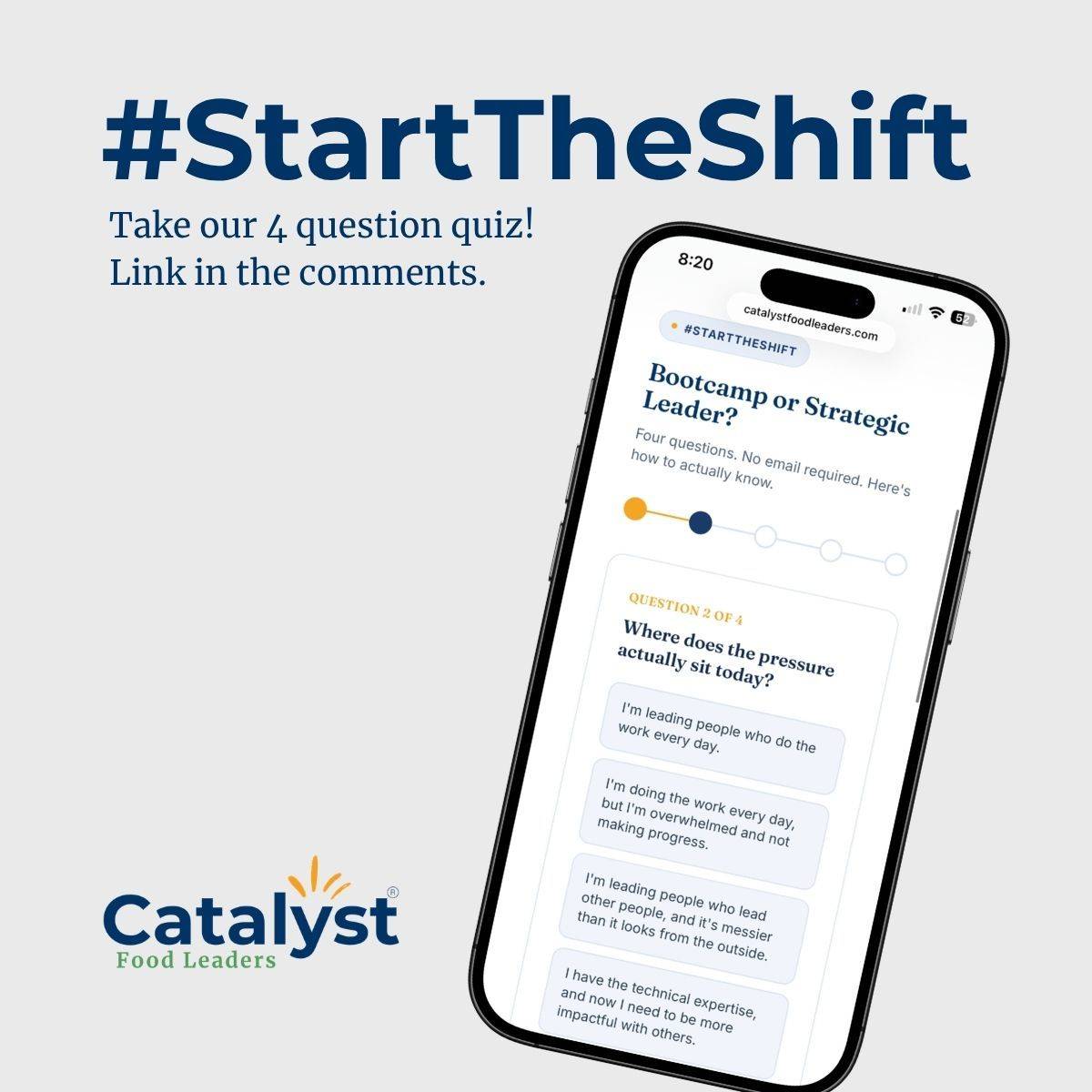
If you're trying to figure out where you personally need to grow to have conversations like that with more confidence, whether that's Bootcamp or Strategic Leader, we built a quick way to find out.