Leadership Isn’t Broken. Our Leadership Systems Are.
Mar 18, 2026
Across industries, leaders are feeling the pressure of constant reaction.
Operational crises.
Customer demands.
Workforce instability.
A steady stream of issues that demand immediate response.
For leaders in the food industry, this pressure is particularly intense. Safety, regulation, supply chains, and operational complexity mean the cost of failure is high and the expectation for rapid response is constant.
But a deeper pattern is emerging across the global workforce.
Leaders aren’t just busy, they’re overwhelmed.
Recent workplace research shows that leadership roles have become significantly more strained in the last few years. Gallup’s global workplace analysis found that manager engagement has dropped sharply, with only about 27% of managers reporting they feel engaged at work, down from 30% the previous year. (The Wall Street Journal)
When the people responsible for leading teams feel disengaged themselves, the impact cascades across organizations.
The result is predictable: organizations spend more time responding to problems than preventing them.
The Leadership Pressure Point
One reason for this pattern is the growing complexity of leadership roles.
Managers today oversee more employees, more cross-functional work, and more competing priorities than they did even a decade ago. Gallup researchers note that managers are often caught between organizational expectations from above and operational realities from below, leaving them responsible for outcomes they do not fully control. (Business Insider)
This pressure creates a structural problem.
Leaders become responsible for solving problems faster than the organization can redesign the systems that create those problems.
In other words, the system produces reaction.
Not the leader.
The Leadership Development Gap
Another factor shaping today’s leadership reality is the way organizations prepare people for leadership roles. Many managers are promoted because they were strong individual contributors — not because they were trained to lead complex systems.
Research from Gartner shows that 60% of new managers fail within their first two years, often because they receive little or no leadership training when they move into the role. (Wharton Executive Education)
At the same time, companies are asking leaders to navigate unprecedented challenges:
global supply chains, generational workforce shifts, regulatory scrutiny, and rising consumer expectations.
Without stronger leadership systems to support them, managers often default to the most immediate solution available: solve the problem in front of them. Then move to the next one.
When Reaction Becomes the Culture
Over time, organizations can begin to normalize this pattern.
Leaders who respond quickly to crises are praised for their dedication. Teams that work overnight to resolve operational problems are seen as committed. Managers who carry the burden of constant escalation are viewed as indispensable.
These behaviors look like strong leadership.
But they also reinforce a reactive culture.
Instead of asking why problems repeat, organizations celebrate the ability to recover from them.
This pattern appears across industries. Leadership researchers have long warned that when organizations prioritize short-term responses over system learning, they create environments where the same problems return in slightly different forms. (ScienceDirect)
The organization becomes excellent at reacting.
But weak at preventing.
The Cost of Firefighting
This dynamic also comes with a human cost.
Leadership burnout is rising sharply. Recent leadership research suggests that more than half of executives report experiencing burnout, with stress levels high enough to threaten retention and organizational stability. (Superhuman Blog)
When leaders are constantly responding to crises, they have little capacity left for strategic thinking, system design, or long-term prevention.
The organization remains trapped in operational urgency. And the same fires keep appearing.
The System Question Leaders Must Ask
The organizations that escape this cycle do not simply hire better leaders. They redesign the systems that shape leadership behavior.
Instead of asking: “Who should fix this problem?”
They begin asking: “What system allowed this problem to happen?”
That shift changes where leadership energy goes. From reaction to prevention. From firefighting to system design.
And from short-term recovery to long-term resilience.
Continuing the Conversation
This week on Real Talk, we explored three ways to lead well when the organization around you feels like a hot mess. 🎧 Listen HERE.
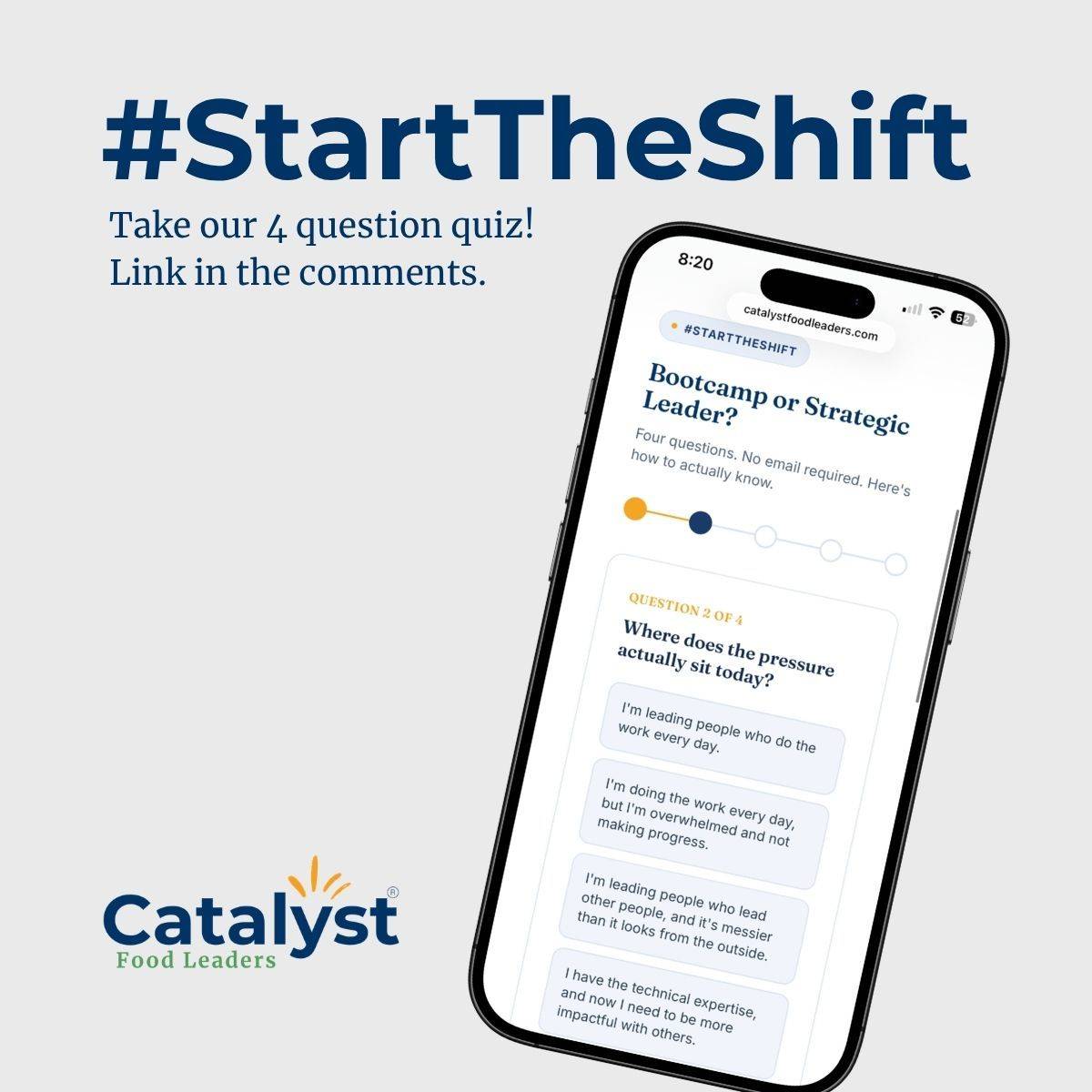
If that conversation resonates with you, the next step is figuring out where you personally need to grow to lead differently inside a system that isn't going to redesign itself overnight. Whether that's Bootcamp or Strategic Leader, we built a quick way to find out.
Take the quiz HERE. Then enroll before Sep 15.
Because culture doesn’t change until leaders do.